early twentieth century
White’s Dangerous Childhood
[T. H. White](entity:character-recall-character-t-h-white-b1394eb1d9ee) grew up amid his parents’ violent marriage in India. His father drank, his mother and father fought, and the child feared that the violence might turn on him; he later called it an unsafe childhood.
After he was left in England, school brought further beatings and humiliation. The fear and shame of those years would shape his later attempts to master danger, hide his desires, and imagine a safer self.
by the late nineteenth century
The Goshawks Disappear
Goshawks once bred across Britain, but land enclosure, firearms, habitat loss, and persecution by gamekeepers steadily reduced their numbers. By the late nineteenth century, British goshawks were extinct.
The loss reflected changing relationships between people and hunting birds: a species once valued in falconry became vermin. Its disappearance would later make the return of goshawks both a conservation story and a personal source of wonder for [Helen Macdonald](entity:character-recall-character-helen-macdonald-88b2826ada1e).
16 March 1936
White Leaves Stowe
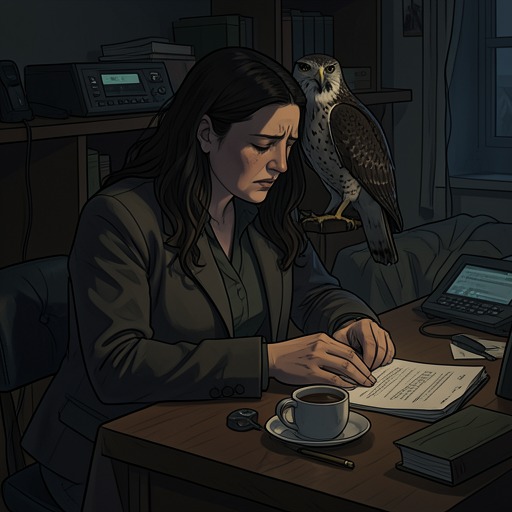
At [Stowe School](entity:organization-recall-organization-stowe-school-aac227b20e9e), [T. H. White](entity:character-recall-character-t-h-white-b1394eb1d9ee) sat in his rooms writing in a dream notebook and imagining escape. He was unhappy, drinking heavily, unsettled by his sexuality, and increasingly unable to bear the school and its people.
He dreamed of leaving for a cottage in the countryside, where writing and solitude might save him. The wish to flee his public identity and recover a feral freedom soon became bound up with his decision to train a goshawk.
spring 1936
White Resigns
After a period of mounting discontent, [T. H. White](entity:character-recall-character-t-h-white-b1394eb1d9ee) resigned from [Stowe School](entity:organization-recall-organization-stowe-school-aac227b20e9e). He had not yet found a stable future, and the barmaid he had hoped to marry had become, in his own words, a lost possibility.
The resignation was a break from schoolmastering, but not a clean escape from the past. White took a small cottage on the [Stowe](entity:location-recall-location-stowe-add00c916306) estate, close to the school, and turned toward falconry as a way to remake himself in the countryside.
spring 1936
White Finds the Feral Hawk
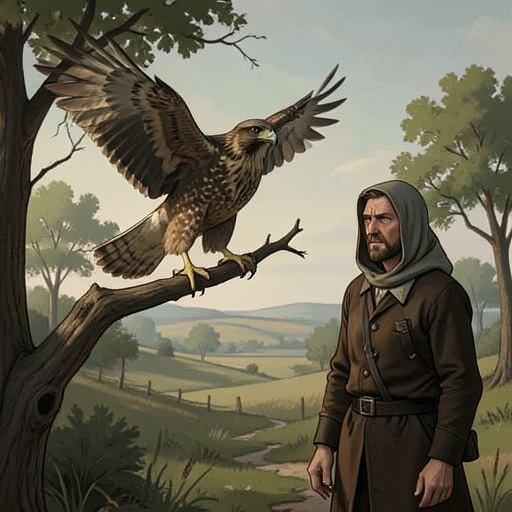
While reading [Gilbert Blaine](entity:character-recall-character-gilbert-blaine-df00a99453a9)’s Falconry, [T. H. White](entity:character-recall-character-t-h-white-b1394eb1d9ee) encountered the account of a goshawk that had reverted to a feral state after being lost. The words struck him as a promise of freedom and ferocity, qualities he longed to reclaim in himself.
He ordered a goshawk from [Germany](entity:location-recall-location-germany-2e3723c2f347) and imagined that training it would let him escape ordinary society. The bird became a vessel for White’s hopes and fears before it had even arrived.
1936
Gos Arrives
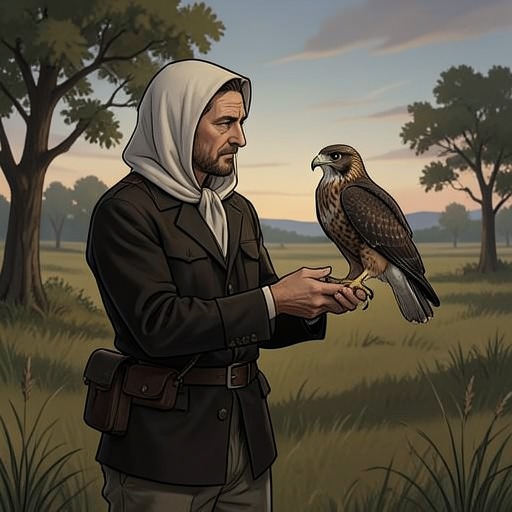
[T. H. White](entity:character-recall-character-t-h-white-b1394eb1d9ee) received a young German goshawk, [Gos](entity:character-recall-character-gos-95ee2c73a203), after the bird had been transported through several hands and across a long journey. White imagined the nest and the frightened young bird’s passage, recognizing in that displacement something like his own childhood abandonment.
He brought Gos into his cottage and began training him without an experienced mentor. The hawk’s arrival made White’s imagined retreat real, but it also placed a vulnerable wild animal inside the emotional drama he was trying to resolve.
summer 1936
White Misreads Gos
White worried that pale hunger marks on [Gos](entity:character-recall-character-gos-95ee2c73a203)’s tail meant the bird had been damaged by earlier deprivation. Instead of keeping the hawk appropriately hungry, he overfed him, repeatedly offering food that a full goshawk did not want.
His anxiety about repairing the bird became a demand that Gos accept his care. The more insistently White tried to earn affection, the more the hawk withdrew, beginning a painful cycle of pursuit, fear, and resentment.
early in Gos’s training
The Sleepless Vigil
[T. H. White](entity:character-recall-character-t-h-white-b1394eb1d9ee) followed an old account of keeping a hawk awake by carrying it through the night. He treated the ordeal as a solitary rite of passage and stayed awake for days, reciting Shakespeare and singing to the frightened, exhausted [Gos](entity:character-recall-character-gos-95ee2c73a203).
White believed that endurance would conquer both bird and self without physical punishment. In practice, the vigil exhausted them both and turned patience into coercion, exposing how easily his wish to be gentle could reproduce the harm he feared.
summer 1936
The First Call
White tried to call [Gos](entity:character-recall-character-gos-95ee2c73a203) across a field with food and a hymn, but the young hawk could not understand what was expected. White tugged the creance, dragging him from his perch, then watched him stumble toward the offered food.
When Gos later flew toward White, the bird’s approach frightened him. White ducked away, and the hawk veered into a hedge. The moment revealed how White’s wish for mastery was undermined by fear, while Gos had been given little chance to learn trust.
summer 1936
The Hawks in the Wood
As [Gos](entity:character-recall-character-gos-95ee2c73a203)’s training stalled, [T. H. White](entity:character-recall-character-t-h-white-b1394eb1d9ee) became absorbed by wild hawks he saw in the nearby wood. He built traps, made a hide, and pursued the birds he mistook for sparrowhawks, neglecting the goshawk he was supposed to be training.
The new obsession offered an escape from the intimacy and uncertainty of Gos’s dependence. It also foreshadowed the way White would withdraw whenever a relationship threatened to become real and reciprocal.
summer 1936
Gos Is Tangled
Left alone on a long, weak creance, [Gos](entity:character-recall-character-gos-95ee2c73a203) climbed a tree and became entangled in the twine. He struggled until he hung exhausted and helpless among the branches; White eventually used a fishing rod to bring him down.
White blamed himself, but his neglect had put the hawk in danger. The episode sharpened the difference between the freedom White imagined giving Gos and the real constraints of the equipment and training he controlled.
late summer 1936
Gos Is Lost
During a storm, White left [Gos](entity:character-recall-character-gos-95ee2c73a203) tied outside with the same unreliable twine that had already snapped before. The hawk bated from the barn and flew away; when White returned, the perch was empty and the line was broken.
White searched for Gos, placed food where the hawk had perched, and tried to lure him back. When the wind carried Gos away from a tree, the bird disappeared from sight. His loss became the emotional and narrative wound at the center of White’s account.
after Gos disappears
White Writes of the Loss
[T. H. White](entity:character-recall-character-t-h-white-b1394eb1d9ee) continued searching the woods and waiting for word of [Gos](entity:character-recall-character-gos-95ee2c73a203), but the hawk did not return. He wrote to [Germany](entity:location-recall-location-germany-2e3723c2f347) asking for another bird and filled his notebooks with regret, uncertainty, and renewed plans for training.
The loss did not end his relationship with Gos. White transformed the failed apprenticeship into a book, allowing the missing hawk to remain alive as a possibility in the reader’s mind.
1937
Cully’s Brief Hunt
After recovering from appendicitis, [T. H. White](entity:character-recall-character-t-h-white-b1394eb1d9ee) obtained another goshawk, [Cully](entity:character-recall-character-cully-d4993105f6c5), whose damaged feathers he tried to repair. Despite the poor condition of her wings and tail, he eventually flew her at a rabbit.
Cully caught the rabbit, and White experienced an intense rush of bloodlust. The success gave him a glimpse of hunting with a hawk, but it did not erase the earlier failure with [Gos](entity:character-recall-character-gos-95ee2c73a203) or the difficult questions about violence that would follow him.
late 1930s
White Imagines Merlyn
While writing [The Sword in the Stone](entity:object-recall-object-the-sword-in-the-stone-c9f9b7aef65d), [T. H. White](entity:character-recall-character-t-h-white-b1394eb1d9ee) shaped Merlyn’s cottage from the rural life and possessions he had gathered around himself: books, animals, fishing gear, and a home in the woods. The imagined magician lived backward through time and could see the future as memory.
Merlyn became a vision of the person White wished to become: a teacher who might protect a vulnerable pupil and interrupt the cycle of cruelty. In the fiction, White could restore what reality had left broken, including the hope that a lost hawk might return.
1937
Falconry at the Berlin Exhibition
[Gilbert Blaine](entity:character-recall-character-gilbert-blaine-df00a99453a9) and [Jack Mavrogordato](entity:character-recall-character-jack-mavrogordato-f7768daa1fc3) represented British falconry at the International Hunting Exhibition in [Berlin](entity:location-recall-location-berlin-54cb4a75d0f6). The event displayed falconry amid Nazi pageantry, where the hawk’s predatory power could be made to serve an image of racial and political hierarchy.
The British display received a bronze falcon trophy sent by Hermann Göring. The object later unsettled falconers who recognized that the sport’s historical glamour and language of natural superiority had been appropriated by Nazi ideology.
1937
White Trains Cully
[T. H. White](entity:character-recall-character-t-h-white-b1394eb1d9ee) trained a second goshawk, [Cully](entity:character-recall-character-cully-d4993105f6c5), after [Gos](entity:character-recall-character-gos-95ee2c73a203)’s disappearance. Cully was damaged by trapping and training, and White improvised repairs to her feathers before eventually flying her at quarry.
Her brief success offered White a version of the self-sufficient life he had imagined: a falconer living from the land. Yet the hunt also exposed how readily desire for success could turn into a desire for blood and mastery.
1939
White Leaves for Ireland
As war approached, [T. H. White](entity:character-recall-character-t-h-white-b1394eb1d9ee) moved to [County Mayo](entity:location-recall-location-county-mayo-6a0962e6523f) and rented [Sheskin Lodge](entity:location-recall-location-sheskin-lodge-c45c7cb22341). He brought falcons with him and worked on his Arthurian writing while trying to remain apart from the conflict.
There he reconsidered writing about hawks. He imagined falconry as an initiation in which the falconer would play inquisitor, magician, and teacher, but the hawk’s eventual escape would complete the enchantment rather than defeat it.
1951
The Goshawk Is Published
[Jonathan Cape](entity:organization-recall-organization-jonathan-cape-e3c4d982a20a) published [The Goshawk](entity:object-recall-object-the-goshawk-6514a4d27e75) after a publisher discovered the manuscript among [T. H. White](entity:character-recall-character-t-h-white-b1394eb1d9ee)’s papers and persuaded him to release it. White agreed on the condition that he could add a postscript describing what he later understood about training a hawk.
The book drew a range of responses, including a condemning letter accusing White of cruelty. The criticism struck him deeply, and his account of failed training became both a confession of harm and an enduring literary argument about love, control, and the wild.
1960s and 1970s
The Hawk Returns to Britain
After goshawks had disappeared from Britain, falconers began quietly importing birds and releasing additional individuals into suitable forests. Their descendants survived and bred, gradually restoring a secretive population.
The return demonstrated that wildness need not be untouched by people. Human action had helped create a renewed population, complicating the idea that nature and human history must remain separate.
around Helen’s birth
Helen’s Twin Brother Dies
[Helen Macdonald](entity:character-recall-character-helen-macdonald-88b2826ada1e) was born prematurely and spent the first weeks of her life in an incubator. Her twin brother died soon after birth, a family tragedy that was not discussed with her as a child.
Years later, learning about her twin helped her reconsider an old feeling of absence and her lifelong desire to hold fast to birds. She wondered whether her childhood hawk drawings and carefully imagined jesses had been attempts to bind what she had not known she had lost.
1970s
Helen’s Childhood of Birds
As a child, [Helen Macdonald](entity:character-recall-character-helen-macdonald-88b2826ada1e) became absorbed in birds of prey, learning their names, habits, and histories. She drew hawks repeatedly and imagined becoming a falconer, while her father helped her find books and supported her curiosity.
Falconry’s specialized vocabulary and old books offered a secret world she could master. Their largely male authors also taught her, without her realizing it, to identify with an elite tradition from which women were often absent.
1979
Helen Reads White’s Book
At eight, [Helen Macdonald](entity:character-recall-character-helen-macdonald-88b2826ada1e) found [The Goshawk](entity:object-recall-object-the-goshawk-6514a4d27e75) in a bookshop and bought it because its cover showed a goshawk. She was puzzled by [T. H. White](entity:character-recall-character-t-h-white-b1394eb1d9ee)’s descriptions of failure, fear, and violence, and initially trusted the falconry books that dismissed his methods.
Even so, she loved [Gos](entity:character-recall-character-gos-95ee2c73a203) as a vivid creature in the story. White himself seemed foolish to her, but the hawk remained comprehensible and memorable, an early presence that would return when [Helen](entity:character-recall-character-helen-25ca9ab47439) later chose to train a goshawk.
when Helen was twelve
Helen Sees a Goshawk Kill
[Helen](entity:character-recall-character-helen-25ca9ab47439)’s parents took her to watch falconers hunting. She saw a goshawk kill a pheasant, then gathered the feathers left in the hedge, unsure how to name the feelings the death had stirred.
She also watched falconers wait beneath trees after their goshawks refused to return. The birds seemed to have slipped beyond the human world, an unsettling independence that Helen never forgot and that later made her wary of training one herself.
adulthood before her father’s death
Helen Trains Other Hawks
[Helen Macdonald](entity:character-recall-character-helen-macdonald-88b2826ada1e) became a falconer and trained several kinds of hawks and falcons, though she never expected to train a goshawk. She preferred the aerial grace of falcons and had absorbed the old books’ hierarchy that placed them above the difficult, solitary goshawk.
Her experience made the practical stages of hawk training familiar, but it did not prepare her for how grief would change her relationship with a bird. The goshawk she once feared would become the focus of a much more personal undertaking.
a few years before her father’s death
The Injured Goshawk Flies Free
While working at a bird-of-prey centre near the [Forest of Dean](entity:location-recall-location-forest-of-dean-81414b480900), [Helen](entity:character-recall-character-helen-25ca9ab47439) helped examine an adult female goshawk that had struck a fence. The bird was powerful and frightening, filling the room with its presence as staff checked her wings and body for injury.
Nothing was wrong with her, so the team released her. The hawk vanished over a hedge, and Helen later found herself replaying that moment in dreams. Its sudden passage into the wild helped set the emotional direction of her later decision to acquire a goshawk.
seven years before her father’s death
Helen Sees Wild Goshawks
One early spring morning, unable to sleep, [Helen](entity:character-recall-character-helen-25ca9ab47439) drove from [Cambridge](entity:location-recall-location-cambridge-9c17d42a788b) into the [Brecklands](entity:location-recall-location-brecklands-8c35494b7e0d) to search for goshawks. In the frost-bright forest she moved cautiously, guided by an attention that felt older than deliberate thought.
At last she watched a pair soaring above the trees, circling and courting before vanishing into the wood. The sight recalled childhood birdwatching with her father and his lesson that a person must stay still and patient to see what they long to see.
by the early twenty-first century
Goshawks Reclaim the Brecklands
The goshawks [Helen](entity:character-recall-character-helen-25ca9ab47439) sought were descendants of birds brought to Britain by falconers after the native population had vanished. Their return to the forests was quiet and successful, producing a substantial population of breeding pairs.
For Helen, their presence in a worked landscape was a source of hope. The wild did not have to mean a place untouched by human hands; people could also make room for wild lives to return.
spring
Helen’s Father Dies
[Helen](entity:character-recall-character-helen-25ca9ab47439) was preparing to leave when her mother called from St Thomas’ Hospital and told her that her father had died of a heart problem. Helen fell to the floor, staring at the piece of reindeer moss she had brought home after seeing the goshawks.
The news made ordinary plans and objects abruptly meaningless. She went to dinner despite the shock, could not eat, and then drove toward home because the small cut she had recently seen on her father’s arm could no longer heal.
the days after her father’s death
The Family Faces the Loss
[Helen](entity:character-recall-character-helen-25ca9ab47439), her mother, and her brother tried to manage the practical aftermath of the death, including collecting her father’s belongings and locating his car. The tasks produced surreal conversations and could not make the loss feel comprehensible.
At Waterloo Bridge, Helen found herself comforted by the Thames moving toward the sea and remembered her father’s project of photographing every bridge along it. The memory offered a brief connection to the shared quests that had made him her father and friend.
the first weeks after the death
Grief Distorts the World
After the funeral, [Helen](entity:character-recall-character-helen-25ca9ab47439) returned to [Cambridge](entity:location-recall-location-cambridge-9c17d42a788b) but could not sleep or make sense of the continuing life around her. She felt as if she were made of burning metal and began to find uncanny significance in coincidences, memories, and passing events.
She read books on bereavement in search of a system that could classify what she felt, but grief refused to follow neat stages. The attempt to organize it could not bridge the world that had ended and the life she still had to inhabit.
early summer after her father’s death
Helen Falls in Love
As the season brightened, [Helen](entity:character-recall-character-helen-25ca9ab47439) briefly believed she was recovering. Instead, her unmet need for love and security attached itself to a man who withdrew when he understood how broken she felt.
His departure intensified her isolation. Helen kept a red dress she could not wear again, a small material remnant of a relationship that had become entangled with bereavement.
summer after her father’s death
Hawks Enter Helen’s Dreams
As rain and flood reports overwhelmed the country, [Helen](entity:character-recall-character-helen-25ca9ab47439) began dreaming repeatedly of goshawks. One particular bird returned to her memory: the injured female she had once examined and released near the [Forest of Dean](entity:location-recall-location-forest-of-dean-81414b480900).
The dreams turned the hawk into an irresistible presence. Helen began to understand that she was not choosing a bird from a list so much as responding to an obsession that had already taken hold of her.
late summer after her father’s death
Helen Decides on a Goshawk
[Helen](entity:character-recall-character-helen-25ca9ab47439) contacted a breeder in [Northern Ireland](entity:location-recall-location-northern-ireland-c23b7da68651) who had a young goshawk available. She chose a small bird, partly because smallness was the only decision she could manage; she felt that the hawk had caught her rather than the other way around.
A friend offered a peregrine instead, but Helen declined and held to her choice. The decision committed her to a difficult undertaking at the moment when grief was making her world feel strange and unstable.
four months after her father’s death
White’s Book Haunts Helen
As [Helen](entity:character-recall-character-helen-25ca9ab47439) prepared to collect her hawk, she found herself avoiding [The Goshawk](entity:object-recall-object-the-goshawk-6514a4d27e75) on the shelf. When she finally opened it, she realized that her anger toward [T. H. White](entity:character-recall-character-t-h-white-b1394eb1d9ee) was mixed with the unsettling feeling that her own wish to train a hawk was not entirely her own.
White’s story had become a conversation across time. His failures, his projections, and his lost goshawk would accompany Helen as she tried to understand what she was doing and why.
the journey to collect the hawk
Helen Makes Mabel’s Jesses
On the long drive north, [Helen](entity:character-recall-character-helen-25ca9ab47439) made leather jesses for the goshawk she was about to collect. The craft brought back her childhood drawings, especially a ghostly kestrel secured by a carefully marked leash.
She connected the jesses with an old impulse to hold on, including the family silence around her twin’s death. As she finished the straps, she also remembered that her father had known the falconry terms he pretended to get wrong, teasing her in a way that had really been a compliment.
early August
Helen Chooses the Smaller Bird
At a Scottish quay, [Helen](entity:character-recall-character-helen-25ca9ab47439) met the breeder and checked the paperwork for two goshawks. The first bird, mistakenly presented as the one intended for her, seemed to her the right hawk; the larger bird assigned to her felt alien and frightening.
Despite her embarrassment, Helen asked to take the first bird instead. The breeder agreed, and the exchange made her selection feel less like a purchase than a moment of recognition.
the day of the purchase
Mabel Begins the Journey
The newly selected goshawk traveled in a cardboard box in [Helen](entity:character-recall-character-helen-25ca9ab47439)’s car while she and [Christina](entity:character-recall-character-christina-6af790722d1a) drove south. At a motorway stop, Helen peered through an airhole and saw feather-dust and one yellow foot glittering in a narrow beam of light.
The bird was alive, though frightened and hidden. Helen thought of the long journeys endured by traded hawks and of [Gos](entity:character-recall-character-gos-95ee2c73a203)’s passage from [Germany](entity:location-recall-location-germany-2e3723c2f347), measuring her own brief trip against the older history of captive birds.
the evening after the journey
Mabel Enters Helen’s Home
[Helen](entity:character-recall-character-helen-25ca9ab47439) carried the hawk into her house and remembers the weight of her on the falconry glove as [Mabel](entity:character-recall-character-mabel-a2367855b656) stepped backward onto a perch. The journey was over, but a new and uncertain life together had begun.
That night Helen dreamed of searching an empty house and seeing her father as a boy on a bombsite, pointing toward a plane before disappearing. The dream joined the new hawk, her father’s absence, and the impossible wish to follow someone into the past.
the first day at home
Mabel Faces the First Room
[Helen](entity:character-recall-character-helen-25ca9ab47439) brought [Mabel](entity:character-recall-character-mabel-a2367855b656) into a darkened room, removed her hood, and watched the hawk bate in terror against the jesses. She tried to remain still and unseen while offering food, knowing that the bird had to learn that the human presence did not always mean danger.
When Mabel briefly forgot Helen and examined the room, Helen felt the pleasure of being accepted and the stranger thrill of being forgotten. The first fragile shift in their relationship came through attention rather than force.
the first days at home
Mabel Eats from the Glove
At first [Mabel](entity:character-recall-character-mabel-a2367855b656) would not eat from [Helen](entity:character-recall-character-helen-25ca9ab47439)’s hand. She gradually relaxed, studied the room, and eventually began taking food, first in the presence of [Christina](entity:character-recall-character-christina-6af790722d1a) and then from small pieces offered on the glove.
The first feeding was not the solemn moment Helen had imagined. It happened amid daylight, conversation, and television. Mabel’s calm acceptance and first rouse showed that their progress depended on the hawk’s own pace, not on Helen’s preferred script.
during the first week
Mabel Receives Her Name
As [Mabel](entity:character-recall-character-mabel-a2367855b656) began taking food from the glove, the name came to [Helen](entity:character-recall-character-helen-25ca9ab47439): Mabel, a gentle name far removed from the grand and violent names [T. H. White](entity:character-recall-character-t-h-white-b1394eb1d9ee) had given [Gos](entity:character-recall-character-gos-95ee2c73a203). Helen wanted her goshawk’s name to stand at the opposite end of the world from death.
Saying the name also reminded Helen that she had one of her own. Her attempt to disappear into the hawk was already beginning to reveal the human self she had tried to set aside.
the first days outdoors
Mabel Meets the City
[Helen](entity:character-recall-character-helen-25ca9ab47439) began carrying [Mabel](entity:character-recall-character-mabel-a2367855b656) outside, first into the college garden and then through the park. The changing world alarmed Helen more than it seemed to alarm the hawk, and passing people and bicycles repeatedly made Mabel bate.
During one outing, a woodpigeon settled in a tree and Mabel’s attention sharpened instantly. Helen saw how the hawk’s world organized itself around possible prey, a different system of attention from the human city surrounding them.
after Mabel settles at home
Mabel Plays with Paper
While reading old falconry books, [Helen](entity:character-recall-character-helen-25ca9ab47439) discovered that [Mabel](entity:character-recall-character-mabel-a2367855b656) would play with a strip of paper and follow a rolled magazine like a toy telescope. The hawk crunched the paper, peered through the tube, and shook with apparent delight.
The play unsettled Helen’s inherited image of the goshawk as a sulky, murderous creature. The books had made little room for such behavior, and she began to see that the hawk exceeded the meanings humans had assigned to her.
during Mabel’s early training
The Walkers Call Mabel Sulky
A man suggested that [Helen and Mabel](entity:relation-recall-relation-helen-and-mabel-fbe8c1d287e4) got along because they were both female. The remark provoked [Helen](entity:character-recall-character-helen-25ca9ab47439) to revisit the descriptions of goshawks in her falconry books, where male authors repeatedly called the birds contrary, sulky, and difficult.
Older writers, by contrast, described goshawks as fearful but capable of affection when treated with courtesy. Helen recognized how easily a falconer’s frustration could be blamed on the bird, and how gendered assumptions had shaped the traditional portrait of the female goshawk.
the weeks after arrival
Helen Carries Mabel Outside
[Helen](entity:character-recall-character-helen-25ca9ab47439) began taking [Mabel](entity:character-recall-character-mabel-a2367855b656) on longer walks, first through nearby streets and parks and then farther into the countryside. Carrying exposed the hawk to new sights gradually, though Helen’s own fear of people made each outing difficult.
Mabel’s growing confidence changed the relationship: Helen watched the world through the hawk’s attention and learned how sharply her perceptions differed from human ones. The training was also drawing Helen away from her ordinary social life.
during the first weeks
Mabel Jumps to the Glove
[Helen](entity:character-recall-character-helen-25ca9ab47439) encouraged [Mabel](entity:character-recall-character-mabel-a2367855b656) to jump from a perch to the glove for food, initially over short distances. The hawk’s powerful landing made each successful flight feel like a crossing of a psychological gulf.
When Mabel began flying between Helen and [Christina](entity:character-recall-character-christina-6af790722d1a), her return seemed to Helen like proof that the bird chose her. That interpretation made the training emotionally charged: each flight carried more than food, and every failure threatened Helen’s fragile sense of connection.
about two weeks after Mabel arrived
The First Calling Lessons
[Helen](entity:character-recall-character-helen-25ca9ab47439) took [Mabel](entity:character-recall-character-mabel-a2367855b656) to a college cricket pitch for calling-off lessons, attaching a creance and calling her across short distances. Mabel flew directly to the glove, giving Helen confidence that the training was progressing.
The lesson took place against Helen’s growing sense that her academic life was slipping away. She had declined a job in [Berlin](entity:location-recall-location-berlin-54cb4a75d0f6) and could no longer imagine a future separate from the hawk, whose training had become the purpose organizing her days.
about fifteen days after arrival
Mabel Flies Before Guests
At a college lunch, [Helen](entity:character-recall-character-helen-25ca9ab47439) brought [Mabel](entity:character-recall-character-mabel-a2367855b656) to meet the Master and his family. She felt unreal and out of place, but the assembled guests were fascinated by the hawk and listened as Helen spoke about falconry.
The scene made visible how much Helen’s identity had narrowed. She no longer felt like a historian or fellow; she feared she had become merely the hawk woman, even as the public attention briefly brought her into human company.
after several successful lessons
Mabel Overshoots the Glove
During practice, [Mabel](entity:character-recall-character-mabel-a2367855b656) began flying toward [Helen](entity:character-recall-character-helen-25ca9ab47439) but snatching food from the glove and continuing past it. Helen interpreted the change as a sign that she had damaged the hawk’s trust, though [Stuart](entity:character-recall-character-stuart-27437d55226b) explained that rich food had made Mabel too eager and that rabbit would help.
Helen struggled to accept a practical explanation because the bird’s behavior seemed to judge her personally. The training exposed how grief had made her turn Mabel’s ordinary needs into a verdict on her own worth.
during early calling practice
Mabel Takes a Pheasant
While [Mabel](entity:character-recall-character-mabel-a2367855b656) trained on the college pitch, a hen pheasant and her chicks appeared nearby. Mabel strained to pursue them, and [Helen](entity:character-recall-character-helen-25ca9ab47439) and [Christina](entity:character-recall-character-christina-6af790722d1a) hurried to drive the birds and moorhens away before the goshawk could catch them.
The absurd scramble made Helen laugh, but it also showed how quickly Mabel’s predatory world could intrude on the carefully controlled training ground. The hunt had to wait until the hawk was flying reliably and the setting was suitable.
before the first free flight
Mabel Receives Her Bell
[Helen](entity:character-recall-character-helen-25ca9ab47439) fitted a small bell to [Mabel](entity:character-recall-character-mabel-a2367855b656)’s tail so she could locate her in flight, and planned to use a radio transmitter as well. The bell rang when Mabel roused, but Helen’s first flight with it went badly and she feared the bird was not ready.
[Stuart](entity:character-recall-character-stuart-27437d55226b) assessed Mabel and advised more work on her condition before flying free. Helen was relieved to hand over the role of expert and accept guidance from a friend who knew goshawks well.
the day before her first free flight
Mabel Finds Her Flying Weight
On a windy hillside, [Stuart](entity:character-recall-character-stuart-27437d55226b) helped [Helen](entity:character-recall-character-helen-25ca9ab47439) assess [Mabel](entity:character-recall-character-mabel-a2367855b656)’s condition. He reassured her that the hawk was not in danger, while Helen worried that lowering her weight meant starving her.
Mabel then flew the full length of the creance to Helen’s glove with new conviction. Stuart recognized that she had reached her flying weight, and Helen mistook the improvement partly for the effect of admitting how depressed she felt.
the following evening
Mabel’s First Free Flight
[Helen](entity:character-recall-character-helen-25ca9ab47439) and [Christina](entity:character-recall-character-christina-6af790722d1a) were delayed by a major road accident on their way to the hill. Once there, [Stuart](entity:character-recall-character-stuart-27437d55226b) encouraged Helen to release [Mabel](entity:character-recall-character-mabel-a2367855b656) at moving quarry, despite Helen’s preference for a more cautious first flight.
Mabel circled uncertainly in the dusk, landed in a young tree, and missed Helen’s glove on her first return. After more calling she came back, and Helen ended the frightening session with the hawk safely on her fist. The first unrestrained flight revealed how much remained beyond Helen’s control.
soon after the first free flight
Helen Hunts with Mabel
[Helen](entity:character-recall-character-helen-25ca9ab47439) began hunting with [Mabel](entity:character-recall-character-mabel-a2367855b656) on farmland, where the hawk pursued rabbits and other quarry. One rabbit escaped by doubling back, while Helen struggled to identify opportunities with senses far less acute than Mabel’s.
The hunt changed falconry from watching into participation. Helen had to respond to the hawk’s success and to the life and death of the animals she pursued, rather than remain a spectator to the flight.
early autumn
Mabel Catches Her First Rabbit
After a difficult hunt, [Mabel](entity:character-recall-character-mabel-a2367855b656) caught a rabbit in a warren and returned to [Helen](entity:character-recall-character-helen-25ca9ab47439) with chalk mud on her feet. Helen watched her eat and felt the intensity of the hunt stretching time and dissolving the ordinary world around them.
The experience became intoxicating. Helen recognized that hunting depended on training and skill, then on surrendering control to chance. The emotional rush offered temporary escape from grief and began to resemble an addiction.
during the autumn hunts
Helen Kills for the Hawk
When [Mabel](entity:character-recall-character-mabel-a2367855b656) caught quarry, [Helen](entity:character-recall-character-helen-25ca9ab47439) sometimes had to kill it quickly to prevent prolonged suffering. She learned to harden her heart enough to act while still feeling sorrow for the animal.
The responsibility pulled her out of the detached role of watcher. The death of the prey made her conscious of her own body, mortality, and accountability to the world she had entered through hunting.
after the first hunts
Helen Sees the Sick Rabbit
[Helen](entity:character-recall-character-helen-25ca9ab47439) encountered a diseased rabbit on a roadside verge, watched by concerned passersby who did not know how to help. Recognizing that it had myxomatosis, she ended its suffering herself.
The rabbit stirred memories of childhood environmental fears, when disease, pesticides, and disappearing wildlife had seemed to herald apocalypse. The encounter showed that the hunt’s questions about death reached beyond [Mabel](entity:character-recall-character-mabel-a2367855b656)’s quarry.
2007
The Northern Rock Queue
During a period of illness and financial anxiety, [Helen](entity:character-recall-character-helen-25ca9ab47439) saw customers queuing outside a [Northern Rock](entity:organization-recall-organization-northern-rock-08cba8d585c2) branch to withdraw their money. The bank run seemed to echo the possessive fear she had been witnessing in herself and in [Mabel](entity:character-recall-character-mabel-a2367855b656)’s mantling over food.
The line made Helen confront the question she had been avoiding: she was training the hawk to hunt and kill. Her desire to disappear into Mabel’s present-tense world could not erase the consequences of taking life.
autumn after the bank run
The Condor Becomes an Image
At an art exhibition, [Helen](entity:character-recall-character-helen-25ca9ab47439) watched a film of a [California condor](entity:creature-recall-creature-california-condor-60c09d4260a3) in a copied bird hide. She recalled the conservation effort that captured the remaining wild condors and bred their descendants in captivity to prevent extinction.
The screen image felt thin beside the living birds Helen had once encountered. She worried that rare animals could become mere icons of loss, their actual lives replaced by pictures and the meanings people imposed upon them.
at the same exhibition
The Dead Spix’s Macaw
In another room, [Helen](entity:character-recall-character-helen-25ca9ab47439) saw a dead, stuffed Spix’s macaw displayed in a glass case. Its loneliness recalled the hospital room where her father had lain after his death.
Helen had spoken to her father’s body, telling him she loved and missed him, then waited for an answer she knew could not come. The encounter joined species extinction to personal bereavement without making them the same loss.
autumn
Mabel Catches a Pheasant
[Mabel](entity:character-recall-character-mabel-a2367855b656) pursued a pheasant into a hedge, and [Helen](entity:character-recall-character-helen-25ca9ab47439) pushed through the brambles to flush it. The hawk caught the bird, and Helen helped pluck it before Mabel began to eat.
Watching the young goshawk with her prey, Helen saw not a symbol of death but a creature discovering what she was made to do. She wept for the pheasant, for her father, for Mabel, and for the child who had once waited patiently to see hawks.
winter after her father’s death
Helen’s Memorial Service
[Helen](entity:character-recall-character-helen-25ca9ab47439) spoke at her father’s memorial service in St Bride’s Church. She told the story of his boyhood plane-spotting at [Biggin Hill](entity:location-recall-location-biggin-hill-c9c0eb538cf5), where officials seized his notes and film after he photographed a secret aircraft, only for him to recover its registration number from an impression in his notebook.
The story revealed her father’s patience, ingenuity, and instinct for recording what he saw. His colleagues and a young photographer shared memories of his generosity, expanding Helen’s sense of family and reminding her that community still existed.
after the memorial service
Helen Rejects Nature as Cure
On the train home, [Helen](entity:character-recall-character-helen-25ca9ab47439) recognized that she had fled into wildness expecting nature to heal her grief. She concluded that the belief was dangerous: human hands needed other human hands, and the wild could not serve as a cure for every sorrow.
She also realized that [Mabel](entity:character-recall-character-mabel-a2367855b656)’s increasingly erratic behavior came from hunger. Helen had misread the hawk because she had made Mabel a mirror for her own pain rather than attending to the bird’s actual needs.
winter
Helen Begins Medication
As her depression and anxiety deepened, [Helen](entity:character-recall-character-helen-25ca9ab47439) visited a doctor and described her father’s death, her financial problems, and her loss of work and housing. He offered help and explained a course of antidepressants, and Helen agreed to try them.
The medicine did not immediately transform her life; it brought tiredness and new worries. But the appointment marked a moment when she let another person see how badly she was struggling rather than trying to manage everything alone.
during the winter
Helen Plays with Mabel
[Helen](entity:character-recall-character-helen-25ca9ab47439) began making toys from paper and playing catch with [Mabel](entity:character-recall-character-mabel-a2367855b656). Although falconers did not usually describe goshawks as playful companions, Mabel caught and returned scrunched paper balls and seemed to enjoy the exchange.
Helen realized that she had no domestic life to balance her wildness. She still loved Mabel, but could no longer pretend that their relationship was human or that becoming a hawk had solved her loneliness.
during the winter of recovery
Helen Recognizes the Otherworld
A poem about Orpheus resurfaced in [Helen](entity:character-recall-character-helen-25ca9ab47439)'s mind, along with the story of [Merlin](entity:character-recall-character-merlin-3f8c52535684) as recounted by Geoffrey of Monmouth, who fled into the forest in sorrow. In both stories, the forest and the realm of the lost are near everyday life, and the eagle helps people cross the
two days before the memorial service
Helen Is Struck by Mabel
While pushing through a hedge to flush a pheasant, [Helen](entity:character-recall-character-helen-25ca9ab47439) was mistaken for prey by [Mabel](entity:character-recall-character-mabel-a2367855b656), who struck her head with her feet. Blood ran down Helen’s face, and the hawk briefly bated toward it before losing interest.
Dazed but newly grounded in her own body, Helen continued walking and noticed the landscape in extraordinary detail. Later, she sat down and wrote her father’s eulogy in a single sustained effort.
autumn
Mabel Chases the Bomber
While [Mabel](entity:character-recall-character-mabel-a2367855b656) ate a rabbit, a Flying Fortress passed low overhead. [Helen](entity:character-recall-character-helen-25ca9ab47439) watched the aircraft and recalled the airmen who had flown bombing missions over Europe, as well as her father’s childhood fascination with planes.
The sight brought together the hawk’s predatory vision and the airman’s view from above. Helen understood that both could be associated with distance, power, and death, and recognized her own longing to possess the hawk’s detached perspective.
later that winter
Helen Finds Her Father’s Diaries
At her mother’s house, [Helen](entity:character-recall-character-helen-25ca9ab47439) found her father’s plane-spotting diaries, filled with hours of observations, aircraft types, and registration numbers. Their exactness recalled her own childhood obsession with falconry and made her father feel newly present.
She understood that collecting and recording planes had helped him order a childhood shaped by war and rubble. The notebooks were not simply lists; they were a way of imagining flight, crossing distance, and resisting disappearance.
the same winter
The Lost Flat Key
Among the diaries, [Helen](entity:character-recall-character-helen-25ca9ab47439) found a piece of cardboard bearing a key to her father’s flat and a note in his handwriting. She had lost the key earlier, and he had promised to have another cut but never did.
Holding the note, Helen finally felt the shape of her grief. Time had not erased her father; it had changed the grief into a clearer recognition of love, which she whispered back to him.
deep winter
Mabel Ranges More Widely
As [Helen](entity:character-recall-character-helen-25ca9ab47439)’s medication and life began to stabilize, she raised [Mabel](entity:character-recall-character-mabel-a2367855b656)’s weight and allowed her to range more widely. The hawk made her own prospecting flights along hedges, sometimes catching quarry beyond Helen’s immediate sight.
Helen began to trust the lines of familiarity between them without insisting on complete control. Their partnership became less a fusion of identities and more a shared practice that allowed each creature to remain separate.
two days after a successful hunt
Mabel Ignores Helen
On a rainy day, [Mabel](entity:character-recall-character-mabel-a2367855b656) flew into trees and ignored [Helen](entity:character-recall-character-helen-25ca9ab47439)’s calls and food. Helen followed her across a lawn and shouted beneath the branches, briefly believing she had stepped backward into another era as a maid watched from a window.
A sparrowhawk then mobbed Mabel, who moved deeper into the trees. Helen had to follow without knowing whether the goshawk would return, confronting the limits of her control and the danger of mistaking partnership for possession.
late winter
Mabel Builds a Local Patch
As [Mabel](entity:character-recall-character-mabel-a2367855b656) ranged farther across the fields, she began revisiting places where she had once seen rabbits, pheasants, or other possible prey. Her route through the landscape became a personal map shaped by memory and hunting.
[Helen](entity:character-recall-character-helen-25ca9ab47439) recognized the same transformation in herself: repeated attention had made the hill a local patch full of meaning. Their overlapping knowledge of the land offered a kind of shared history without erasing the difference between hawk and human.
February 2008
The Earthquake Shakes Helen
During the night, an earthquake shook [Helen](entity:character-recall-character-helen-25ca9ab47439)’s bed and sent the lampshade swinging. The rare event revived her childhood fear of apocalypse and made the world feel torn from its foundations.
Helen rushed downstairs to check on [Mabel](entity:character-recall-character-mabel-a2367855b656). The hawk had felt the tremors but had gone back to sleep, calm in a world that had terrified Helen. Mabel’s composure reassured her and made the bird feel, for a moment, like a household guardian.
27 February
Helen Leaves Mabel to Moult
As spring approached, [Helen](entity:character-recall-character-helen-25ca9ab47439) drove [Mabel](entity:character-recall-character-mabel-a2367855b656) to her friend Tony’s house in [Suffolk](entity:location-recall-location-suffolk-336da7d54d36), where the goshawk would spend the moulting season in a spacious aviary. Helen removed the jesses and watched Mabel inspect her new surroundings before flying to a perch.
The separation was necessary for the hawk’s health, but it reopened the fear of losing her. Helen left Mabel behind and accepted the warmth and kindness of the people waiting inside the house.
the night before Mabel’s departure
The Quake Reassures Helen
Before the drive to [Suffolk](entity:location-recall-location-suffolk-336da7d54d36), the earthquake woke [Helen](entity:character-recall-character-helen-25ca9ab47439) with terror. She feared that [Mabel](entity:character-recall-character-mabel-a2367855b656) would be frightened by the shaking, but found the hawk asleep and untroubled after the tremors passed.
Mabel’s return to sleep showed Helen a creature at home in a world whose instability she could not bear. The moment did not make the hawk a myth; it made her reassuringly alive and present.
after Mabel returns from moulting
Helen Takes Mabel to Apple Day
[Helen](entity:character-recall-character-helen-25ca9ab47439) brought [Mabel](entity:character-recall-character-mabel-a2367855b656) to a country fair where falconers displayed their birds. Overwhelmed by the crowd, Helen at first felt as frightened as the hawk, but Mabel gradually settled among eagles, falcons, and visitors.
The gathering showed Helen how much the falconry community had changed from its old image of aristocratic men. She felt unexpectedly at home among the varied people who shared the work, stories, and care of flying birds.
spring, after the memorial service
Mabel Catches a Rabbit in Spring
As spring stirred [Mabel](entity:character-recall-character-mabel-a2367855b656)’s hunting instincts, [Helen](entity:character-recall-character-helen-25ca9ab47439) took her to a rabbit field before going to teach. The goshawk ignored nearby rabbits and pursued one farther away, eventually bracing herself against the ground as the quarry tried to retreat down a hole.
The hunt ended successfully, but the episode began a period of intense anxiety. Mabel became more independent and difficult to call back, while Helen’s own isolation and distress deepened.
spring, before the memorial service
Mabel Catches Two Pheasants
Following a pheasant into a release pen, [Mabel](entity:character-recall-character-mabel-a2367855b656) caught two birds in rapid succession. [Helen](entity:character-recall-character-helen-25ca9ab47439) rushed inside after her, worried about trespassing and trying to retrieve the hawk and her quarry.
While cutting through a pheasant, Helen sliced her thumb badly and bled on the long walk back to the car. The chaotic hunt intensified her fear that she was losing control of both the hawk and her own life.
around the time of her father’s memorial
Mabel’s Hunger Turns to Aggression
[Helen](entity:character-recall-character-helen-25ca9ab47439) became increasingly anxious and withdrawn as [Mabel](entity:character-recall-character-mabel-a2367855b656) sometimes flew past her, sometimes returned, and sometimes struck her with her feet. She began to avoid people and interpreted the bird’s behavior as proof that something was wrong with her.
After the memorial service, Helen understood that Mabel had grown more muscular and was being flown too low in weight. Hunger, not a hidden judgment of Helen, explained the aggression. The realization forced her to see Mabel’s needs apart from her own grief.
after the memorial service
Helen Returns to Community
At her father’s memorial, [Helen](entity:character-recall-character-helen-25ca9ab47439) had heard colleagues, friends, and a young photographer describe the help he had given them. Their stories made the family’s loss part of a wider community rather than an isolated private wound.
The experience began to loosen Helen’s retreat into the wild. She recognized that hands were made to hold other human hands and that a hawk could not replace the relationships she had abandoned.
later in the autumn
Mabel Finds the Pheasant
While hunting, [Mabel](entity:character-recall-character-mabel-a2367855b656) chased a pheasant into a hedge. [Helen](entity:character-recall-character-helen-25ca9ab47439) searched through the brambles, trying to understand the hawk’s position and the prey’s likely escape, until the pheasant broke cover and Mabel caught it.
The hunt briefly divided Helen’s attention among hawk, prey, and human self. When Mabel held the dead bird, Helen saw her as a young animal discovering her nature and wept for the lives bound together in the moment.
while Helen is recovering
White’s Lost Hawk Lives in Fiction
[Helen](entity:character-recall-character-helen-25ca9ab47439) reread [The Sword in the Stone](entity:object-recall-object-the-sword-in-the-stone-c9f9b7aef65d) and reconsidered the way [T. H. White](entity:character-recall-character-t-h-white-b1394eb1d9ee) had written his own hopes into Merlyn and the Wart. The fictional wizard could recover the lost hawk and educate the boy without repeating the cruelty of White’s own schooling.
White’s fantasy became a form of restoration: he could remake himself as a wise teacher who understood power and opposed violence. The imagined return of [Gos](entity:character-recall-character-gos-95ee2c73a203) also echoed Helen’s childhood belief that lost beings might still be waiting somewhere in another world.
Christmas after the first year of training
Helen Meets the Wild at Home
[Helen](entity:character-recall-character-helen-25ca9ab47439) and her mother spent [Christmas](entity:time-recall-time-christmas-a573265d0167) in [Maine](entity:location-recall-location-maine-7d037802b86b) with friends. She watched a red-tailed hawk pursue a squirrel through a suburban neighborhood, catching it beside homes and a children’s play structure.
The hunt showed Helen that wildness did not belong only in remote landscapes. A fierce encounter between predator and prey could unfold in the middle of community, helping her imagine that the wild could be brought home rather than used as an escape from human life.
Christmas Eve in Maine
Helen Burns the Christmas Tree
As [Helen](entity:character-recall-character-helen-25ca9ab47439) dreaded leaving the welcoming household, her friend Erin proposed burning the [Christmas](entity:time-recall-time-christmas-a573265d0167) tree outdoors. They covered it in firelighter and set it alight, producing a sudden blaze that filled the snowy lawn with light and smoke.
The improvised ritual made Helen and Erin feel like children again, delighted by the fire and wary of its danger. It gave her a moment of shared warmth before she returned to England and to [Mabel](entity:character-recall-character-mabel-a2367855b656).
after Christmas
Helen Returns to Mabel
Back in England, [Helen](entity:character-recall-character-helen-25ca9ab47439) hurried to see [Mabel](entity:character-recall-character-mabel-a2367855b656) at [Stuart](entity:character-recall-character-stuart-27437d55226b) and Mandy’s home. She thanked them for caring for the hawk while she had been away and recognized how much help and affection they had given her.
The return marked a change in Helen’s relationship with others. She could say that she loved her friends and accept their care instead of treating her solitary life with the goshawk as sufficient.
after her college job ends
Helen Finds a New Home
[Helen](entity:character-recall-character-helen-25ca9ab47439) moved from her college house to a family home offered by a friend. Surrounded by toys and children’s drawings but living there alone, she felt the house’s absence as if it belonged to the rooms themselves.
She spent long hours outside with [Mabel](entity:character-recall-character-mabel-a2367855b656), increasingly unable to return to ordinary conversation. Her attention had narrowed to the hawk and the landscape, and her sense of being human began to feel precarious.
during the winter hunts
Helen Sees the Hawk’s World
Out in the fields, [Helen](entity:character-recall-character-helen-25ca9ab47439) followed [Mabel](entity:character-recall-character-mabel-a2367855b656)’s attention so closely that she struggled to hear her mother on the telephone. A rabbit caught in nettles became the center of an intense, almost unbearable scene of blood and movement.
Helen recognized that she had begun to adopt the hawk’s patterns of fear, appetite, and withdrawal. The imagined transformation that had once seemed magical was becoming dangerous, blurring the boundary between her own species and Mabel’s.
after months of hunting
Helen Fears the Transformation
[Helen](entity:character-recall-character-helen-25ca9ab47439) grew jumpy, isolated, and prone to pain and panic. After reading an account of Yukaghir hunters who risked losing their human identity by taking on an animal’s body, she recognized her own increasingly unstable identification with [Mabel](entity:character-recall-character-mabel-a2367855b656).
The hawk had become more than a companion: Helen had borrowed the traits she associated with goshawks and made them her own. She realized that this transformation was not an instructive escape but a threat to her ability to remain connected to human life.
after completing the book
Helen Visits White’s Cottage
[Helen](entity:character-recall-character-helen-25ca9ab47439) visited [Stowe](entity:location-recall-location-stowe-add00c916306) and then found the ordinary cottage where [T. H. White](entity:character-recall-character-t-h-white-b1394eb1d9ee) had lived. The landscape had changed: the woods were gone in places, and the chapel where White had walked with [Gos](entity:character-recall-character-gos-95ee2c73a203) had disappeared beneath a racing circuit.
For a moment Helen wanted to approach the current resident and search for more traces of White. She chose not to intrude, accepting that White was gone and that the living person in the garden was not a ghost to be reclaimed.
the book’s ending
Helen Leaves the Ghosts Behind
Standing near White’s former home, [Helen](entity:character-recall-character-helen-25ca9ab47439) felt the old desire to cross into the past and bring someone back. She set that desire aside and walked away, acknowledging the separation between the living and the dead.
The final gesture was both modest and decisive: she could honor her father, White, and the lost hawk without treating memory as a means of undoing death. The wild remained outside human possession, and Helen could return to her own life.